8 Hands-On Upcycling Workshop Ideas for Diverse Groups
In This Article
The Organiser’s Checklist to Host an Engaging Upcycling Event
An upcycling workshop is a great way to demonstrate that everyone can take action to tackle textile waste. At the same time, it brings people together and gets them to tap into their creative side. Participants walk away with a practical item they have made with their own hands, fun memories, and a new skill that can change how they view unwanted textile items in their daily life.
But hosting a memorable upcycling workshop comes with its challenges. Too often, handicraft is stereotyped as a ‘girly’ activity, making male participants reluctant to join in. Then comes the barrier of entry – many creative ideas require a basic level of needlework or experience with sewing machines. And there is a delicate balancing act – you want people to make something useful and beautiful, while remaining mindful of the material used and the waste created by the workshop itself.
To solve this, we have sourced and vetted dozens of upcycling concepts to find the ones that check the boxes for sustainability, inclusivity, and low waste. Below are 8 practical upcycling ideas, complete with planning notes covering time constraints, skill levels, and organisation tips, to help you run a seamless and impactful event.
1. Braided Fabric Coasters
- Materials:
- By participant: Old t-shirt
- By organiser: Scissors, fabric glue, masking tape.
- Time: 30–45 min
- Skill required: none
The braided fabric coaster can be completed in half an hour with no needlework or sewing machines required. A single facilitator can comfortably manage a group of 10 to 15 people. To make it interactive, ask participants to bring t-shirts in different colours so they can trade fabric strips and mix shades during the workshop.
Organiser’s Tip: Thin or overly washed t-shirts can make braiding tricky. For a sturdy coaster, brief your participants to bring a heavier-weight tee made of 100% cotton or a good poly-cotton blend.
Clean and Green Singapore has a great follow-along instruction video. Try it out if you have access to materials at home.
2. Square Fabric Coasters
- Materials:
- By participant: Old clothing made from cotton
- By organiser: Cotton fabric scraps, quilt batting, iron, ironing board, ruler, scissors, sewing clips or pins, sewing machine
- Time: 60-90 min
- Skill required: Beginner sewing machine experience
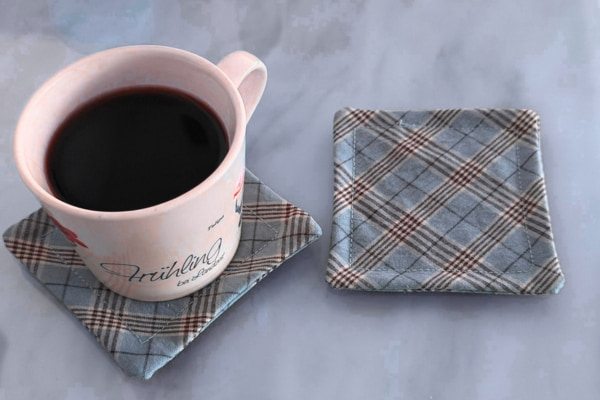
The square fabric coaster is an excellent project when you have access to sewing machines. The result look likes a polished, store-quality item.
Organiser’s Tip: Since this project requires a sewing machine, having a few people with basic sewing skills as participants or workshop assistants will keep things moving smoothly. If participants have zero experience but are eager to learn, this is the perfect, low-stakes project to teach them how to sew a straight line on the spot. Make sure you budget extra time if you plan to teach sewing skill live.
3. Fabric Braided Keychain Charms
- Materials:
- By participant: Old coloured t-shirt, unwanted jewelry or mismatched earrings (optional)
- By organiser: Scissors, keychain keyrings or lobster clasp rings, jump rings, fabric glue
- Time: 60-90 min
- Skill required: None
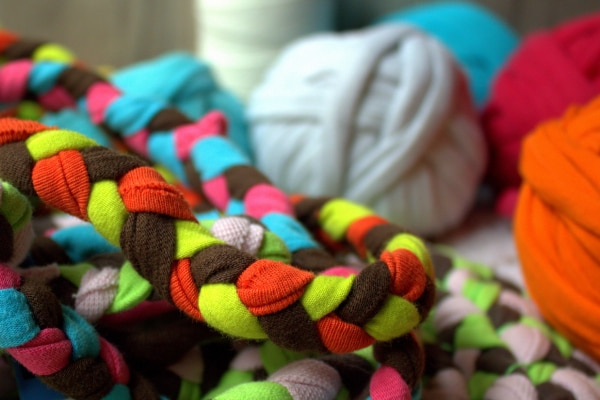
This project scales up the braiding technique into a stylish, wearable accessory. Requiring no sewing or special equipment, it’s suitable for all audiences and settings. You can give the waste-reduction theme a boost by asking participants to bring in broken necklaces, lone earrings, or old charms they no longer wear and give them a second life as keychain accents.
Organiser’s Tip: Similar to the braided coasters, the quality of the t-shirt material matters. Heavier-weight cotton yields a studier braid. Don’t forget to encourage colour-trading at the start of the session so participants can mix and match different fabric strands for a vibrant look.
Here is a tutorial to make a charm yourself at home.
4. Pet Tug Toy
- Materials
- By participant: Old t-shirt or sweatshirt
- By organiser: Scissors
- Time: 30-45 min
- Skill required: None
This project uses a basic braiding and knotting technique to turn old clothing into a durable pet toy. No sewing required means it can appeal to both males and females, but might not interest someone who doesn’t have pets at home.
Organiser’s Tip: Fabric composition and condition determines the durability of the toy. Similar to other braided items upcycled from old t-shirt, thicker t-shirt made from 100% cotton or polycotton gives better results than thin, heavily worn-out tees. If some participants don’t have pets, suggest gifting it to a friend’s pet or donating to a local animal shelter to make it meaningful.
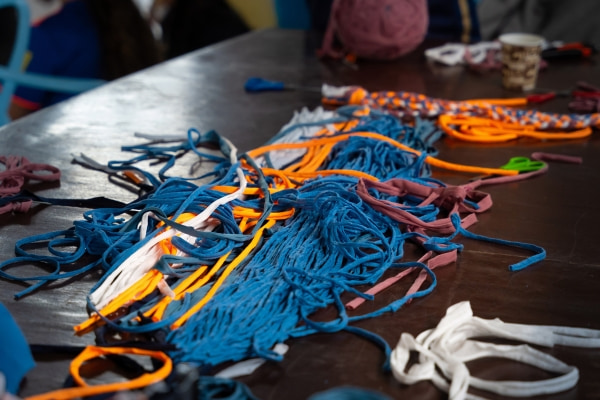
5. Simple Tote Bag
Tote bags offer versatile upcycling possibilities because they can be adapted to almost any material you have on hand. Old denims, bed linens, tablecloths, and curtains all work brilliantly. You can even get creative and use unconventional materials such as old umbrellas, coffee sacks, or discarded PVC banners. Learn from the Lions Befrienders Service Association who successfully rescued over 130 discarded banners, engaged hundreds of seniors in the process and secured sponsorship from the SG Eco Fund for their project.
- Materials:
- By participant: Material of choice
- By organiser: Scissors, measuring tape, chalk, sewing clips/pins, sewing machines
- Time: 2.5–3 hours
- Skill required: Basic sewing machine experience
Organiser’s Tip: Because this project involves structured assembly, you will need a skilled instructor who is handy with a sewing machine to lead the group, or the support a few assistants. Although tote bags are universally useful, unconventional material offers a rugged look that is often more appealing to the male participants.
6. No-Sew T-Shirt Bags
- Materials:
- By participant: Old t-shirt, ideally with colour or print
- By organiser: Scissors
- Time: 30-45 min
- Skill required: None
This is a classic upcycling project that quickly converts an old t-shirt into a functional tote bag using only strategic cuts and knots.
Organiser’s Tip: This is a very common and popular workshop due to its simplicity. You can make yours stand out by focusing on styling. Encourage participants to experiment with how they cut the necklines for different handle styles, and how they tie the bottom fringe. Tying the knots inside the bag gives a clean look, while tying them on the outside creates a fun, tasseled boho tote.
Here’s a video tutorial to try it out yourself.
7. Draw String Pouches
- Materials:
- By participant: Old clothing made from cotton or linen
- By organiser: Additional cotton scrap, pattern templates, scissors, measuring tape, chalk, sewing clips/pins, sewing machines, rope or cord
- Time: 2.5–3 hours
- Skill required: Basic sewing machine experience
This project teaches participants how to construct a classic, multi-functional drawstring pouch from fabric scraps. Participants learn sewing logic through the process of creating a functional casing for the rope to slide through.
Organiser’s Tip: The cutting phase can easily bottleneck the session, so it is highly useful to have the instructor pre-make sturdy pattern templates for participants to trace around. This workshop can also accommodate participants with zero sewing skills if you pair them up with a partner who knows how to operate the sewing machine.
8. Cushion Covers
This project teaches the fundamentals of home decor sewing by turning flat fabric panels into a structured cushion cover.
- Materials:
- By participant: Heavyweight old home textiles such as unused denims or curtains
- By organiser: Supplementary scrap fabrics, scissors, measuring tape, chalk, sewing clips/pins, sewing machines
- Time: 2.5–3 hours
- Skill required: Basic sewing machine experience
Organiser’s Tip: This project tends to appeal more to the senior group. You can attract a more diverse audience by offering decorative, office-appropriate designs to freshen up the covers, such as premade appliqués in denim or seasonal themes. And don’t forget to tell participants to bring the exact measurements of the cushion (the inner pad) they plan to cover.
On a Circular Fashion Journey Yourself?
Wherever you are in the world, get in touch to share your ideas, progress, or hurdles.
We’d love to hear your story, or put our heads together to solve your current challenges with you.
Keep Reading

The Short, Medium, and Long Loops of Circular Fashion
A clear guide to circular fashion in Singapore, what it means, how it differs from sustainability and ESG, and the three pathways to start the…
Sakala-si and Sakiori: How Designers Elevate Upcycled Textiles on the Global Runway
How runway fashion labels upcycle without limiting design freedom: A case study for brands rethinking upcycling and circularity
Funding Creative Textile and Upcycling Community Projects: Lessons from Past SG Eco Grant Awardees
Learn how Singapore’s fashion brands, textile artists and social agencies are using the SG Eco Fund to scale upcycling workshops and community initiatives.