Sakala-si and Sakiori: How Designers Elevate Upcycled Textiles on the Global Runway
In This Article
Sakala-si, Sakala-sa
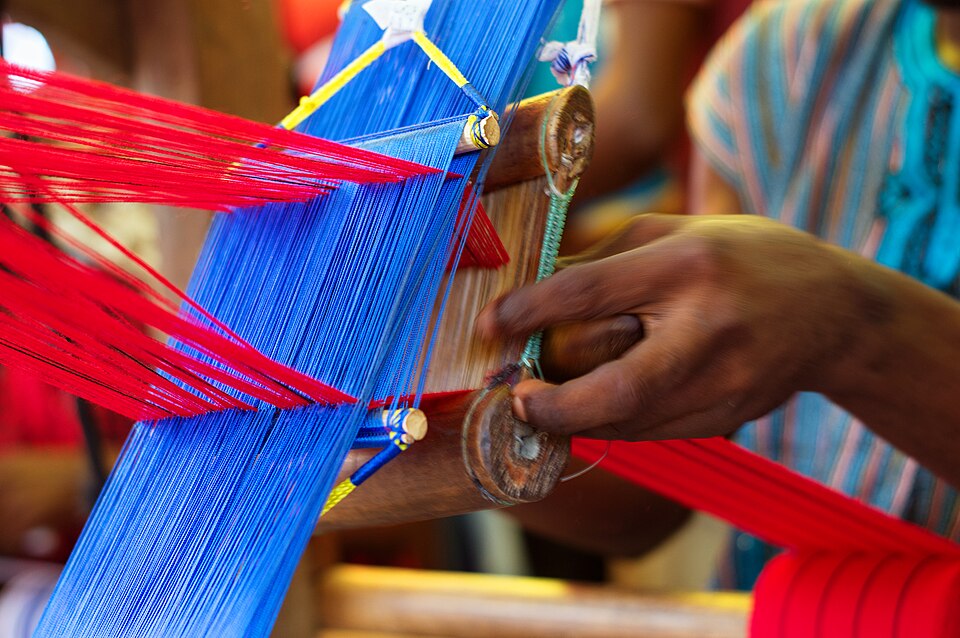
That’s the sound of a traditional West African stripweaving loom at work. The centuries-old technique, on the verge of vanishing, is now employed to tackle a modern problem inundating Africa – textile waste.
At the NKWO studio in Abuja, Nigeria, discarded denim, end-of-line cotton, and cutting-room waste are collected. The artisans painstakingly cut them into fine strips, then work them back together, by hand, into new fabric. The fabric is finished with hand-dyeing, embroidery, or sometimes beads. It is called Dakala Cloth.
Dakala is innovative because it weaves the solutions of a few intractable problems into one: reduction of textile waste, preservation of traditional crafts, and community empowerment. The designer behind it – Nkwo Onwuka – has risen to the forefront of sustainable fashion for boldly pushing the boundary on how we typically think of upcycling and recycling textile waste into high-fashion pieces.
Coming Home to an Innovation
Onwuka launched the fashion brand bearing her first name – NKWO – in London in 2007. Returning to her roots in Nigeria to relaunch the brand five years later, she wanted to continue her work using local woven fabrics. With limited access to the kind of fabric she wanted, she set out to create it herself, with what was already available around her – sacks of fabrics from imported secondhand clothing that would otherwise have been landfilled.
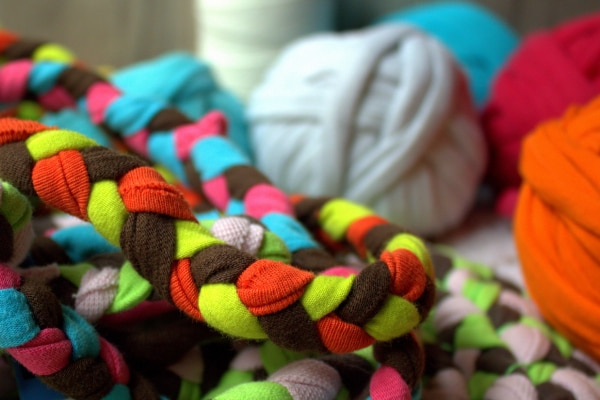
It was also in returning to her roots that she discovered the lost art of handloom weaving, which shaped her material upcycling work. Onwuka chose to work mainly with denim and cotton for their durability and suitability for loom weaving. Dakala Cloth was the result of her long process of research and experimentation. It has a distinctive African texture and handwoven feel to it, yet it is made using a nonwoven method. Over time, Onwuka added Dakala Strings – braided textile waste, woven directly into garment panels, and Dakala Web – fabric waste stripped into yarn then woven on handlooms using an improved zero-waste method.
Not just transforming waste into material and fashion pieces, Onwuka’s work transformed lives. Her studio provided craft skill training and employment to women in different communities, from the cotton growers to yarn makers to women living in an IDP (Internally Displaced Person) camp. “What does your brand stand for?” an interviewer once asked Onwuka. “Positive impact on people, care for the environment, and using my voice,” she replied. Dakala is the tangible proof of all the three woven together.
And the world took notice. A Dakala piece entered the V&A Museum’s permanent collection as part of the Africa Fashion exhibition, and was nominated for the Beazley Design of the Year Award. In 2022, Naomi Campbell appeared on Vogue Arabia donning a Dakala cape. In September that year, Dakala’s creator – Nkwo Onwuka – was awarded with the prestigious Camera Nazionale della Moda Italiana (CNMI) Sustainable Fashion Award for Emerging Designer.
The Revival of Sakiori: Tear it Out to Weave it Back Again
Halfway across the globe from Nigeria, in Japan, a traditional weaving technique called sakiori is sparking fresh creations from contemporary eco-conscious fashion designers.
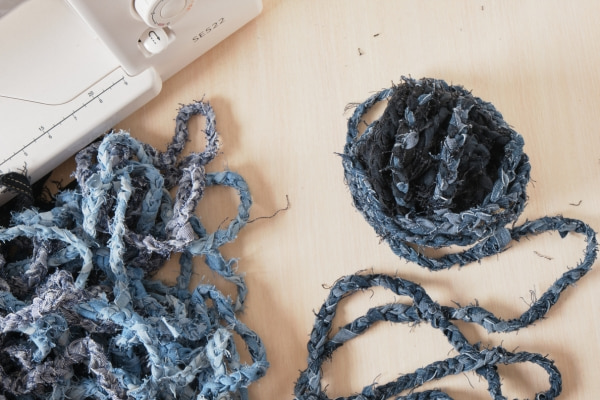
Sakiori literally means to tear and weave. Dating back to the 18th century, the practice was born out of necessity when silk and cotton were rare and expensive in Japan. Locals shredded old kimonos or hemp garments into fine strips and wove them back into new textile. The result was a textured, durable, tweed-like fabric with unique patterns that could be used for winter coats, bags, or rugs.
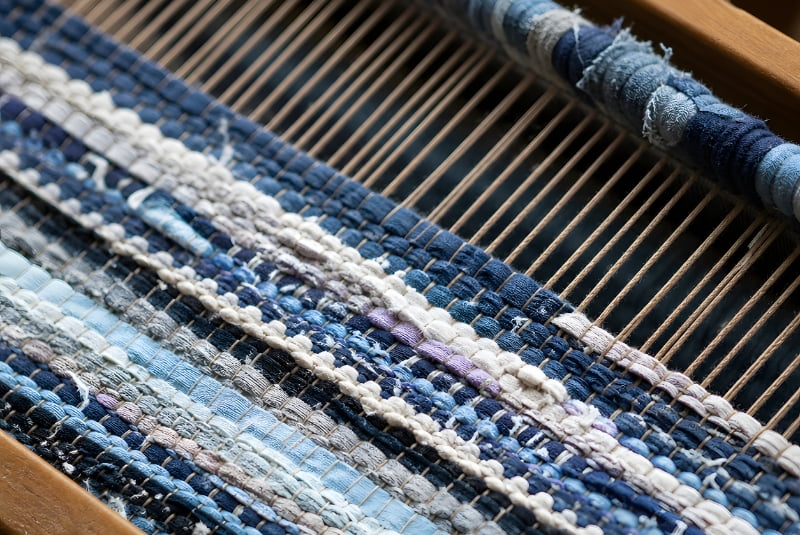
For the last half century, the near-ubiquitous practice almost disappeared. There is no need to upcycle old clothes when a variety of new fabrics are abundantly available. But it isn’t lost in the minds of Japanese eco-forward designers, like avant-garde designer Kozaburo Akasaka, luxury fashion house Issey Miyake, and artisanal street wear brand Kuon.
Similar to Onwuka on the other side of the world, they are looking for ways to elevate circularity on the runway while preserving traditional craft. Their design principles are alike. With Dakala, Onwuka advocates for the “Philosophy of Less”. With sakiori, the Japanese designers return to the cultural concept of “Mottainai” – a sentimental equivalent of “Waste Not, Want Not” in the Western world.
During New York Fashion Week in September 2023, sakiori was seen in the distinctive circular swirls of the jeans the models walked the runway in. The same Kozaburo Spring/Summer 2024 Collection also featured cycora – a premium material made from disassembled end-of-life garments.
The designer of the lineup – Kozaburo Akasaka – has been incorporating sakiori into his designs since the debut collection, when he collected cut-off jean legs to shred and reweave into new material. He shared in an interview that he aspired to “spread the teachings and mindset of sakiori in the fashion industry today.” To Akasaka, circularity, with sakiori at the heart of it, isn’t just about upcycling and the environment, it is also about art and the cycles of life, death and rebirth.
Rethinking Material in Upcycling
Upcycling, recycling and downcycling are important approaches in reclaiming textile waste. In a perfectly circular world, all unwanted textiles can be transformed into new functions, new products, new materials, or new inputs to be made into material again. But translating that ideal into reality faces massive challenges.
Upcycling vs Recycling vs Downcycling
Upcycling

Turning discarded material into something of higher value, such as new fashion items, household goods, or accessories (e.g., new clothing, tote bags, pouches).
Recycling

Converting textile waste into something approximating the same value, such as recovering fibres to be respun into new yarn.
Downcycling

Turning damaged textile into something of lower value like cleaning rags, insulation, stuffing and padding material.
The biggest technological bottleneck is separating fibres in blended fabrics to recycle them back into yarn. While emerging technologies can handle certain blends like polycotton, they are not yet commercially viable at scale. That means upcycling remains the most accessible approach to reclaiming value in textile waste for now.
However, upcycling has its own constraints. Transforming unwanted materials into items of higher value requires an artistic eye, keen craftsmanship, and intense labour to overcome the limitations of the original garment.
Upcycling Fragments into Material and Art
Without the creative vision, most upcycling becomes ‘retrofitting’. You design around the shape of what already exists. An object becomes another object: a shirt into a bag, a pair of jeans cut into shorts. It is one approach to upcycling, and a necessary one, because it doesn’t require specialised skills or artistry. But it has limitations in terms of the value recovered.
Patchwork and quilting offer a way to solve the shape constraint of the original inputs, allowing for aesthetic variety and colour play. However, this variety can introduce a new dimension of visual and structural fragmentation, which isn’t always the intention of the artist.
This is where designers like Onwuka and Akasaka push the boundaries and inspire us to reimagine. In the making of Dakala, Onwuka was practically asking: What if we weave together what’s already there? This design question leads to a breakthrough because it removes the constraints of the unpredictable and irregular inputs the upcycling artists have to work with. Woven together, the fragmented objects to be upcycled become raw material to be freely sculpted into high-value creations.
Value creation in upcycling isn’t just about what is visible to the eye, but also what it sparks in the mind. Akasaka, who studied philosophy in Tokyo before becoming a fashion designer, treats circularity as a spiritual and design muse rather than just a sustainability challenge. To him, sakiori and upcycling are ways to “reincarnate” old clothing, and symbols of the eternal cycle of life, death, and rebirth. They are part of a larger theme of impermanence and imperfection woven into his design – a philosophy celebrated in his past collections, and one that will continue to inspire more.
When the Collective Asks “What If”
Upcycling, given its labour and skill requirement, will remain an artisanal approach to textile waste. What NKWO, Kozaburo, and others show us is a different way to think of upcycling – not as an object to retrofit, but as an inspiration for material innovation, cultural preservation, artistic expression, and social contribution.
Their collaborations – NKWO with minimalist shoe maker Wildling, Kozaburo pairing sakiori with the regenerated polyester cycora – remind us that when we ask “what if” together, we can reimagine creation and make circular fashion closer to reality.
On a Circular Fashion Journey Yourself?
Wherever you are in the world, get in touch to share your ideas, progress, or hurdles.
We’d love to hear your story, or put our heads together to solve your current challenges with you.
Keep Reading

The Short, Medium, and Long Loops of Circular Fashion
A clear guide to circular fashion in Singapore, what it means, how it differs from sustainability and ESG, and the three pathways to start the…
8 Hands-On Upcycling Workshop Ideas for Diverse Groups
Explore 8 engaging upcycling ideas community events or corporate sustainability days that show textile waste actions everyone can take.
Funding Creative Textile and Upcycling Community Projects: Lessons from Past SG Eco Grant Awardees
Learn how Singapore’s fashion brands, textile artists and social agencies are using the SG Eco Fund to scale upcycling workshops and community initiatives.